
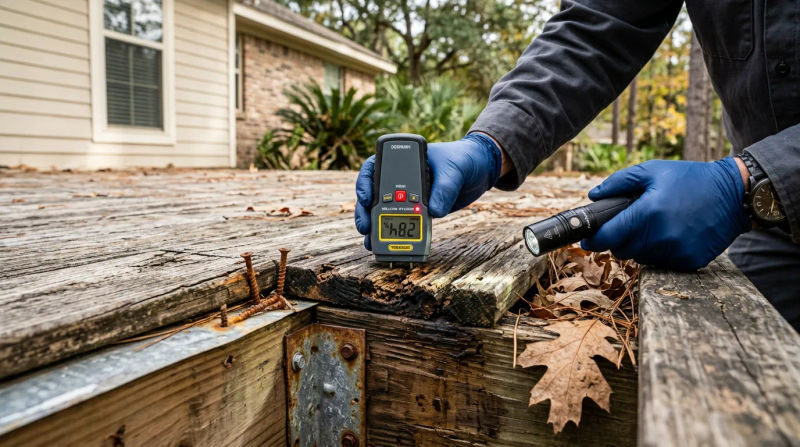
As a lead builder with over a dozen years of experience on the Gulf Coast, I know that the arrival of cooler, drier October air feels like a welcome relief after a long, humid summer. You’re probably looking forward to enjoying your deck more, maybe with a cup of coffee in the morning or for a weekend cookout. But as you step outside, you place a hand on the railing and feel a slight wobble that wasn’t there before. Or maybe you notice a board underfoot feels a bit...spongy. These small observations are your deck’s way of telling you it’s time for a closer look.
After months of Loxley’s intense heat, humidity, and frequent downpours, the shift to drier autumn weather often reveals the hidden toll the summer has taken. Wood that was swollen with moisture begins to contract, exposing new cracks and loosening connections. That’s why October is the perfect time for a thorough deck inspection. Let's walk through the seven key signs that indicate your deck needs professional attention before winter sets in.
Common Signs and Symptoms
A visual check is the first step in assessing your deck's health. Our trained crews follow a standardized process to evaluate every component, but you can spot many of the initial red flags yourself. Here’s what to look for:
- Spongy or Soft Deck Boards: This is one of the most critical soft deck boards warning signs. If you walk across your deck and certain areas feel bouncy or soft underfoot, it often points to wood rot. Use a screwdriver or a similar pointed tool to gently press into the suspicious board. If it sinks in easily, the wood fibers have been compromised by moisture and decay.
- A Loose or Wobbly Railing: Your deck’s railing is a primary safety feature. Grab the top rail and give it a firm shake. Is there significant give, sway, or wobble? This is a major concern. A loose deck railing safety check is something every homeowner should do regularly. The issue could be loose balusters, a weakened post connection, or rot where the posts meet the deck frame.
- Visible Wood Damage: Look closely at the surfaces of your deck boards, posts, and stairs. Are you seeing long, deep cracks (a condition known as “checking”)? Is the wood splintering, making it unsafe for bare feet? While some minor cracking is normal as wood ages, widespread or deep cracks can allow water to penetrate deeper, accelerating rot.
- Corroded or Raised Fasteners: Examine the nails and screws holding your deck together. Do you see rust stains bleeding from the fastener heads? Are any nail heads popping up above the surface of the boards? Corrosion weakens the fastener’s holding power, and raised heads are a tripping hazard and a sign that boards are moving due to moisture cycles.
- Gaps at the House Connection (Ledger Board): The ledger board is the piece of framing that attaches the deck directly to your house. This is the single most critical connection. Look for any gap that has opened up between the house and the deck. Any separation here is a serious structural red flag that requires immediate professional evaluation.
- Persistent Mold, Mildew, or Algae: In our humid Loxley climate, some surface algae is inevitable, especially in shaded areas. However, if you see dark, persistent patches of mold or mildew that return quickly after cleaning, it can indicate a deeper moisture problem. It suggests the wood isn't drying out properly, which can lead to rot.
- Failing Stain or Sealant: A quality stain or sealant is your deck’s first line of defense against UV rays and moisture. If you see widespread peeling, flaking, or fading, it means the protective layer is gone. A simple test is to sprinkle some water on the surface; if it soaks in immediately instead of beading up, the wood is unprotected and it’s time to reseal.
What Causes This Problem
Understanding the root causes of these issues helps in preventing them. Here in southern Alabama, the environment is the primary culprit. The intense cycle of summer heat and heavy rain, followed by drier fall air, forces wood to constantly expand and contract. This movement loosens fasteners, opens up cracks, and stresses joints.
For many homes in the Loxley area, particularly in newer subdivisions built in the last decade, decks may have been constructed as part of a rapid building process. While the homes themselves are modern, the attached decks sometimes don't receive the same level of attention to detail. We often see issues stemming from:
- Inadequate Water Management: Decks without proper gaps between boards or that lack good ventilation underneath can trap moisture, creating a perfect environment for rot and mold.
- Improper Fasteners: Using interior-grade screws or non-galvanized nails is a common shortcut that leads to premature corrosion and structural weakness.
- Insufficient Footings: The posts that support your deck must rest on concrete footings that go below the frost line. In our region, soil movement from saturation can cause improperly set posts to shift, leading to an unlevel or unstable deck.
- Direct Wood-to-Ground Contact: Any structural wood touching the soil directly will wick up moisture and begin to rot very quickly. All support posts should be connected to the concrete footing via a metal bracket.
When to Call a Professional
Some annual maintenance, like cleaning and sealing, can be a DIY project for a handy homeowner. However, when it comes to the structural integrity and safety of your deck, a professional evaluation is essential. You should call for a professional deck inspection if you notice:
- Any of the soft deck boards warning signs mentioned above.
- A wobbly railing that you can’t easily tighten or diagnose.
- Any gap forming between the deck and your house.
- Widespread rot or corrosion on posts, joists, or fasteners.
Our technicians are trained to look beyond the surface. A proper deck inspection Loxley professionals conduct involves getting underneath the deck to examine the framing, joists, support posts, and ledger board connection - areas where the most serious problems hide. While a homeowner can perform a loose deck railing safety check, an experienced professional can determine if the cause is a simple loose bolt or a much more serious issue like a rotting post.
An expert can provide a detailed report on your deck’s condition and a clear plan for any necessary repairs, ensuring the work is done correctly and up to code. This peace of mind is invaluable, especially for a structure that supports your family and friends.
Conclusion
Your deck is more than just an addition to your home; it’s a place for relaxation and making memories. Taking a moment this October to perform a quick visual check can make all the difference in its longevity and safety. The cooler, drier weather provides the perfect window to spot issues that were masked by summer’s humidity.
Pay attention to the warning signs: soft boards, loose railings, visible cracks, and failing finishes. These are your deck’s signals that it needs attention. Addressing small problems now - like replacing a single board or resealing the surface - is far easier and more affordable than dealing with major structural failure down the road.
If you notice any of these signs, don't hesitate. Contact a local, qualified professional for a comprehensive deck inspection. It’s a small step that ensures you can continue to enjoy your outdoor space safely for years to come.