
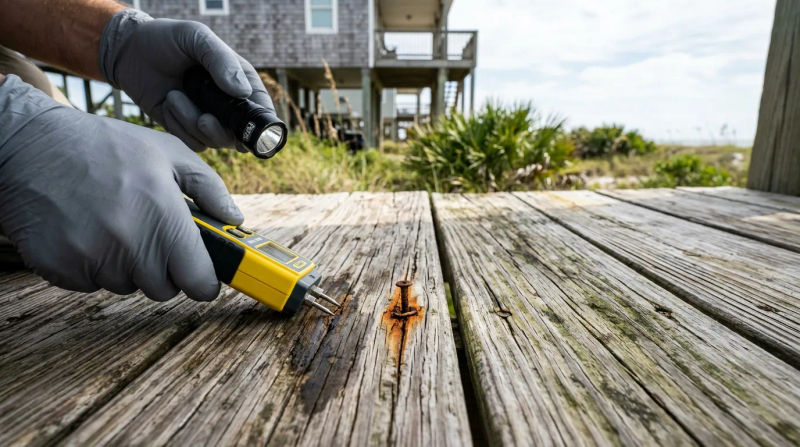
There’s a unique sense of relief that comes with October on Dauphin Island. The oppressive summer humidity finally breaks, and the air cools enough to truly enjoy our outdoor spaces again. You might be looking forward to hosting family for the holidays or just enjoying a quiet morning coffee with a view of the Gulf. But as you step onto your deck, you feel a slight give in a board that wasn't there last spring, or you notice the railing wobbles more than it should. These small signs are easy to dismiss, but for coastal homes, they can be early warnings of bigger problems.
As a deck builder with over a decade of experience on the Gulf Coast, I've seen firsthand how our unique barrier-island environment - with its salt spray, intense sun, and wind-driven rain - can take a toll on outdoor structures. This fall, before the holiday season gets into full swing, is the perfect time to give your deck a thorough look. The drier air makes it easier to spot issues that were masked by summer's constant moisture.
Common Signs and Symptoms
A comprehensive Dauphin Island deck safety check starts with knowing what to look for. Many of the most serious issues begin subtly. Here are some of the most common warning signs our crews encounter.
- Spongy or Soft Deck Boards: If you walk across your deck and certain areas feel bouncy or soft underfoot, take it seriously. This is one of the classic coastal deck rot signs. Use a screwdriver or a similar tool to gently press on the suspect board. If it feels soft or the wood fibers flake away easily, you likely have rot.
- Wobbly or Loose Railings: This is a critical safety issue. Grab the top of your railing and give it a firm shake. There should be very little to no movement. Loose deck railing symptoms are a major red flag because a failing railing can lead to serious injuries. The problem could be with the railing posts themselves, the hardware connecting them, or the deck frame to which they are attached.
- Visible Rust Stains or Corroded Fasteners: Look closely at the nails, screws, and bolts holding your deck together. Do you see rust streaks running down the wood? Are the screw or bolt heads heavily corroded? Salt-laden air accelerates the corrosion of metal fasteners, especially if they weren't stainless steel or properly hot-dip galvanized. A compromised fastener can no longer provide the structural support it was designed for.
- Cracked, Splintered, or Faded Wood: While some cosmetic cracking is normal as wood ages, deep, wide cracks (especially on structural members like posts and joists) can be a problem. These cracks allow water to penetrate deep into the wood, promoting rot from the inside out. Extensive splintering can also indicate the wood is drying out and losing its integrity.
- Gaps Between the Deck and the House: One of the most critical connections is where the deck attaches to your home, known as the ledger board. Look for any gap that has opened up between the house and the deck. This could signal that the fasteners have failed or the ledger board itself is rotting, creating a risk of catastrophic deck collapse.
- Water Pooling or Poor Drainage: After it rains, does water stand in certain spots on your deck for hours or even days? This indicates a problem with slope or board spacing. Constant moisture creates a perfect breeding ground for mold, mildew, and rot.
- Unstable Stairs: Deck stairs are a high-traffic area. Check the stair stringers - the saw-toothed boards that support the steps - for any cracks or signs of rot. Test each step to ensure it's solid and check that the handrails are secure.
What Causes This Problem
Understanding the cause of these issues is key to preventing them. On Dauphin Island, our decks face an accelerated aging process compared to inland structures. The primary culprit is our coastal environment.
The constant exposure to salt spray and high humidity is incredibly corrosive. Salt not only eats away at metal fasteners but also draws and holds moisture in the wood, preventing it from ever fully drying out. This persistent dampness is the number one cause of rot. Wind-driven rain from storms forces this saltwater into every tiny crack and joint, compromising the innermost parts of your deck's structure.
Many of the homes on Dauphin Island were built in the 1990s and 2000s and feature large, multi-level decks built on tall pilings. While these designs are magnificent for capturing views, their sheer size and complexity create more potential failure points. Every post, beam, and joist is fully exposed to the elements from all sides. The extensive framing required for these elevated structures means there are hundreds of connections that need to be sound. A single corroded bolt or a small patch of rot on a support beam can compromise a much larger section of the deck.
Improper materials or construction techniques can also be a root cause. If the original builder used electro-plated galvanized fasteners instead of stainless steel or hot-dip galvanized, they simply won't stand up to the salt air for long. Likewise, if flashing wasn't properly installed at the ledger board, water can get behind it and rot both the deck frame and the framing of your house.
When to Call a Professional
Some minor maintenance, like cleaning or sealing, can be a DIY job. However, when you see the warning signs discussed above, it's time to call for a professional deck inspection. While you can perform a visual check, an experienced technician knows exactly where to look for hidden damage.
We strongly recommend calling an expert if you notice:
- Any movement or wobble in the railings or stairs.
- Soft or spongy wood, especially on support posts or joists.
- A visible gap between the deck and your house.
- Widespread corrosion on fasteners.
Our trained crews have standardized processes for evaluating deck safety. We don't just look at the surface; we get underneath to inspect the joists, beams, support posts, and all the critical connections that hold the structure together. On an elevated coastal home, this kind of thorough inspection is not just for peace of mind - it's essential for safety. Attempting to diagnose or repair structural issues without the proper knowledge and equipment can be dangerous.
Conclusion
Your deck is more than just an add-on; it's a structural part of your home and a key part of enjoying the coastal lifestyle. The large, beautiful decks common on Dauphin Island require regular attention to remain safe and sound. By taking a proactive approach this fall, you can identify potential problems before they become severe hazards.
Pay attention to the feel of the deck under your feet and the stability of the railings. Look for the subtle coastal deck rot signs and check your fasteners for corrosion. Acting on these early warnings will protect your family, your guests, and your investment.
If you notice any of these signs, contact a local Deck Building professional for an inspection. An expert evaluation can provide a clear picture of your deck's condition and help you create a plan to ensure it remains a safe and beautiful space for years to come.